
Living with Integrity (and a Lesson from an Airplane)
When I was growing up, the word integrity wasn’t part of my everyday vocabulary, and I don’t remember hearing it at home. Still, my parents lived it. Looking back, they modeled integrity in the choices they made, the way they treated people, and the kind of life they built.
Integrity became a lot more real to me when I was a student at LeTourneau University studying aviation. In aviation, “integrity” isn’t a character trait—it’s a structural issue. “Check gear down, clear to land” was a clearance that I heard from the tower before landings. If the landing gear doesn’t have integrity, you’re not going to have a good landing. And if the engine and its parts don’t have structural integrity… well, that “not good landing” can show up sooner than anyone wants.

One of the clearest lessons in structural integrity I have had was in August of 1997, when I had the once in a lifetime opportunity to pilot our Piper Aztec across the Atlantic Ocean. This is the airplane. I took this picture in St. Johns, Newfoundland, Canada on the way to Cape Verde, West African Islands.
The problem was fuel: the airplane didn’t have enough capacity for the distances we needed to fly. So, we obtained a Special Flight Permit—often called a “Ferry Permit.” The form for the official request is 8130-6. It’s the kind of permit that lets you operate, with certain limitations, outside the normal rules. That permit allowed us to fly the airplane above its normal weight limits, and we used that flexibility to add two aluminum fuel tanks in place of the back four seats. If memory serves, each tank held around 100 gallons of avgas. That bumped total fuel capacity from 188 gallons (about 7 hours flight time) to 388 gallons (about 16 hours) and gave us enough range to go from St. John’s, Newfoundland, all the way to Spain or Portugal if we had to. Of course, all that extra fuel also meant a lot of extra weight. The airplane actually flew very well while overloaded—but the permit was clear: we were not supposed to land at that weight.
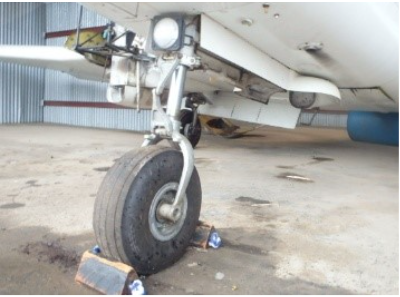
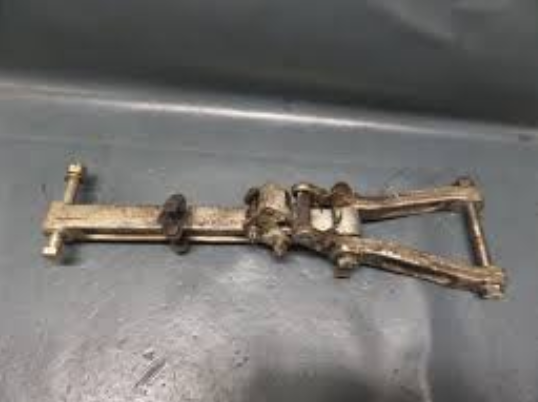
Here’s why that mattered: the landing gear wasn’t designed (or tested) for landing at that weight. So, we had to think through what we’d do “in the unlikely event of an emergency landing” while we were still overloaded. A gear failure—and a crash landing—were real possibilities, maybe closer to “probabilities”. Because of that, the ferry permit required a certificated mechanic (me) to inspect the landing gear after each landing, using a flashlight, mirror, and magnifying glass. After each landing and before the next takeoff, I inspected it carefully. No cracks. No signs of stress. Everything held up. And while we were overloaded, we treated the airplane gently… easy taxiing, smooth takeoffs, and no landing…until we’d burned enough fuel to be back within weight limits.
So, what does integrity look like in a person? When I inspected that landing gear, I was looking for cracks, bends, defects, or anything that didn’t match what it was supposed to be.
Life has a way of doing the same thing for us. When pressures come—stress, temptation, fear, exhaustion, overload—what starts to show? Do we tell the truth? Do we refuse to cheat? Do we stop ourselves from “spinning” the facts so we look better? Do we still choose to do the right thing when it costs us something… maybe even a job?
This dictionary definition comes from Webster’s. It describes integrity as:
“Firm adherence to a moral code” (incorruptibility)
An “unimpaired condition” (soundness)
Being “complete” or “undivided” (wholeness)
That definition asks some uncomfortable questions. Am I staying “undivided,” or am I one person in public and another in private? Am I sound on the inside—not just painted and polished on the outside?
And just to bring it back to aviation for a second: as a missionary pilot and mechanic, it can be tempting to “bend” standards—carry a little extra weight, push into weather you normally wouldn’t (and definitely shouldn’t), or take a shortcut on maintenance. I’ve known pilots who did that and I might have done a little myself. However, for many it didn’t end well.
I’ve seen compromise in other areas of life too, even in ministry. I’ve known pastors who damaged their integrity in catastrophic ways; one was in prison the last I heard. Others are no longer welcome in many churches because of their character… because compromised integrity tells a painful story. I’ve also known people who compromised personal integrity, financial integrity, or spiritual integrity. Every time, the results were heartbreaking.
So, what do we do when integrity gets damaged? If I had found a crack or a bend in the landing gear after we landed in Santa Maria, Azore Islands, we would’ve been grounded until the part could be replaced. But moral failure isn’t as simple as swapping out a component. I believe in forgiveness, and I hold tightly to this promise: “If we confess our sins, He is faithful and just to forgive us our sins and to cleanse us from all unrighteousness” (1 John 1:9). At the same time, consequences can still linger. A ministry may turn into a prison ministry. A marriage may carry wounds that take a long time to heal if they ever do heal. Reputations follow us. And once we cross one line, it often becomes easier to cross it again…and then to cross other lines too. In his book on integrity Dr. Henry Cloud calls that “the wake.” It’s what we leave behind us as we cruise through life… our own personal wake.

“Who a person is will ultimately determine if their brains, talents, competencies, energy, effort, deal-making abilities, and opportunities will succeed.”
So, what helps us keep integrity intact? The best path is prevention—choosing a high standard in the small things, long before the big tests show up. And accountability matters. We’re accountable to a loving, just, and holy God, and we also need a few trusted people who can tell us the truth (and whom we’ll actually listen to). When I was a teenager, there were things I was tempted to do—or at least try once—but I couldn’t stand the thought of my mom or dad finding out. They lived with integrity, and they expected it from me.
Years ago, I knew someone that almost everyone—including me—would’ve described as honest. But she had a phrase that she leaned on all the time: “I am who I am, and I can’t change who I am. I’m just being me.” The longer you knew her, though, the harder that was to accept. People close to her might also have described her as bitter and entitled—and, honestly, one of the most difficult people they’d ever tried to work with. Did she have integrity? She sure left some hurting people in her “wake.”
That’s a good reminder for me: integrity isn’t just about what I say I believe—it’s about who I am and who I’m becoming. It’s about my own “wake.” By God’s grace, I can grow, change, and become more “undivided.”
“Remember, in times of crisis people will follow those with character. Not competence or authority, but character.”